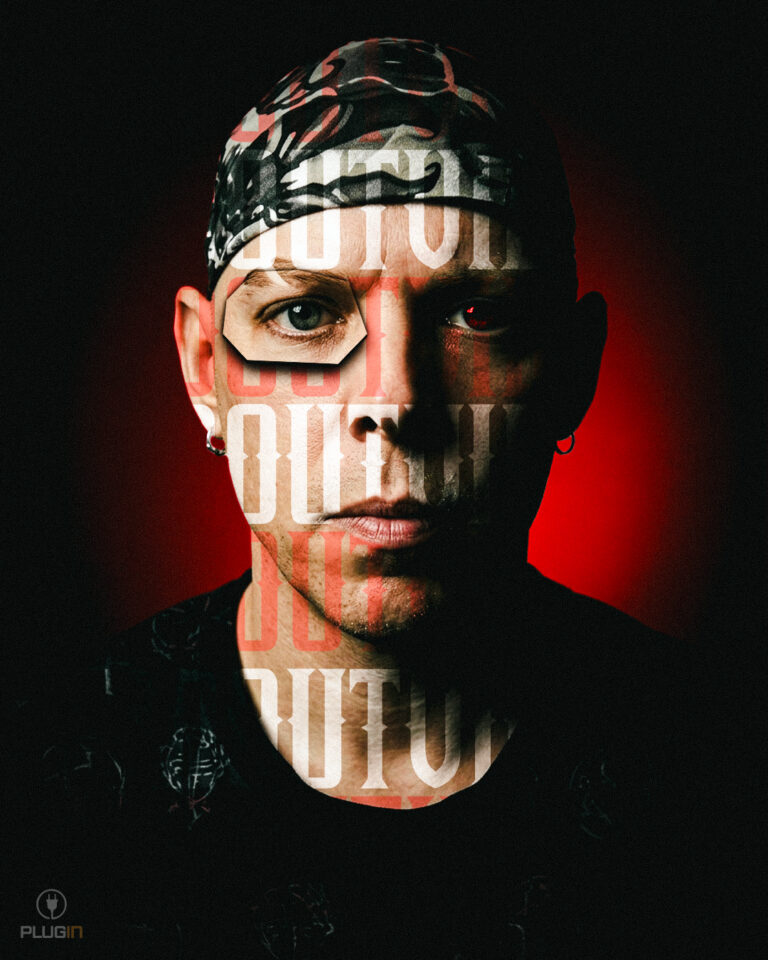
Artists are known to seek fame and then there are artists who appear to be destined to fame way before the light ever shines on them. Salaaheddin, or, as he was called in his youth, Edward J. Clark, of the West Side of Chicago, is strictly in the second class. He is not a presence that is constructed on hype or algorithmic luck. It is based on identity, experience and a sense of purpose that is bigger than music itself.
His name means more than just branding. It was not created during a studio session or selected because it was beautiful, and it was provided during a spiritual awakening. YahYah, a man, fresh out of jail, approached Clark with a straightforward question; what was his Muslim name? Clark didn’t have one. YahYah proposed Salaaheddin, a tribute to one of the most revered warrior-scholars of all time. Clark did not merely accept it as a name, but a calling. Now when he talks about it, it becomes obvious – this was no reinvention. It was recognition of who he already was becoming.
Growing up in the Proviso neighborhood, Maywood, Westchester, Broadview, all of which are collectively called The Woods, Salaaheddin was raised in the agreeable atmosphere of what renders toughness and truth. But in those early years there was something out of the ordinary in him. As they had distractions, he had notebooks. His first studio song, recorded at the age of only 12 with his brother London and his group, The Derelicts, was at Mix-Masters Multimedia Studios with Chicago radio legends. The music of the age never came out of bondage–but the spirit of it never died.
Music, for Salaaheddin, isn’t just a craft. It’s inheritance. His great-grandfather, who was called Gingerale Street, was employed at the Cotton Club where he was a musician and entertainer in a time where art and survival were inseparable. His mother is a house music singer and ballerina with a firm belief in the Chicago house music. The BOSBros AllStars, his late brothers, had poetry in their veins. The story was already written, he is merely carrying it on, in his words.
Salaaheddin now runs successfully as an independent entity under Badkids Kamp / Good Music Universe, and has established a niche that cannot be defined. He refers to his sound as experimental hip-hop, gangster poetry – -but that seems an understatement. He incorporates spoken word, hip-hop and R&B in his music, making it layered and purposeful, inspired by both street and literary knowledge. The product of Griot tradition and artists such as Malik Yusef, his work is less of a song and more of a transmission – something to touch and feel as well as to hear.
His philosophy is reflected in his creative process. Nighttime is time to write music with his band finding concepts together and creating sound in real-time. It’s not transactional. It’s communal. Part notebook, part digital archive, part spiritual exchange – all music is a moment of alignment and not mere production.
Never has a recognition been wanting. His project, Sonic Sinema, was nominated as best spoken word album and Badkids Drinking Hot Sauce and Riding in Crayons were nominated as album of the year at the Grammys. He has performed at such places as the Creator Space in Santa Monica on Grammy weekend, where he does not present his performances as shows, but as a form of healing. Not to the audience only–to himself.
As any artist, who walks his own line, obstacles have appeared. An effort to stifle or to censor his advancement has not escaped notice. But Salaaheddin doesn’t dwell on opposition. His point of view is based on faith: once there is a sense of purpose, opposition ceases to exist.
That attitude is perfectly reflected in his newest single, Starship. The song begins with a statement of self-identity and transcendence and then passes to the themes of betrayal, survival, and spiritual grounding. It is spiritual and earthly, thoughtful and antagonistic, a harmony that characterizes his music and his attitude. No distance exists between the message and the man who is saying it.
Central to all that he does is purpose. He does not have a prepared response when he discusses what listeners ought to feel, but unvarnished truth. He would like people to realize authenticity whenever they hear it even though they might not have heard it previously.
Salaaheddin calls this part of his journey the Parable of Eddie Mack, Chapter 3: Ascension. It’s a title that speaks volumes. To him, his career is not a ladder to success, it is a continuation of an already existing narrative.
And maybe that’s what sets him apart. He does not mean to seek his audience. He is sure that they already exist – and at the moment of connection, it will not be necessary to explain.
Salaaheddin is not here to be found.
Here he is to be comprehended.
About the Author